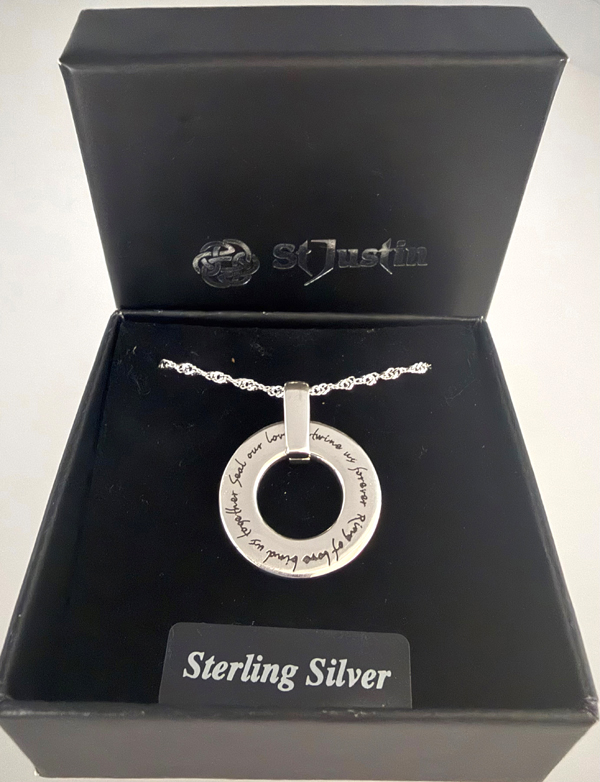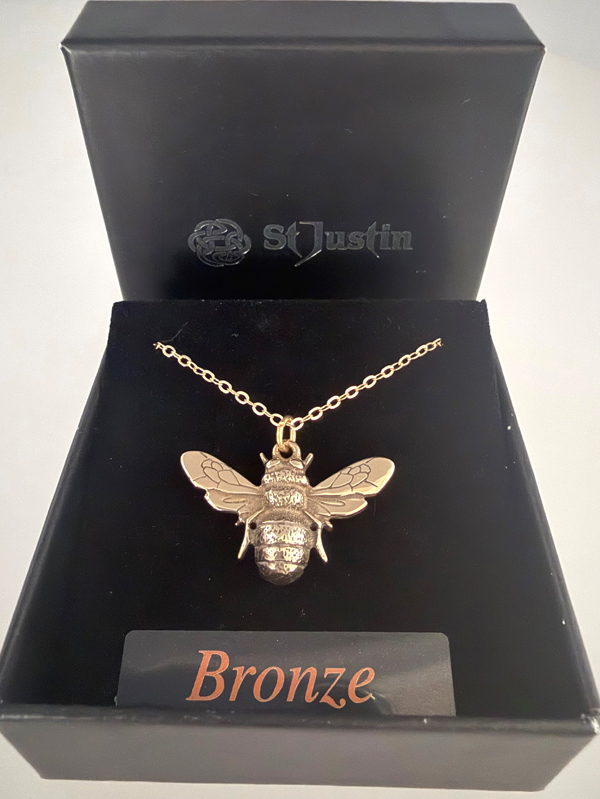
Our silver jewellery is made from 92.5% sterling silver, and our bronze is made using recycled copper and Cornish shipwreck tin, using a traditional technique known as the lost wax casting process. This time-honoured method allows us to reproduce even the finest details of an original design, transforming a delicate wax pattern into a beautifully finished piece of jewellery.
The Mould and the Wax
The process begins with a master pattern of the jewellery design. A flexible rubber mould is formed around the master and vulcanised using heat and pressure. Once set, the mould is carefully cut in half, creating two interlocking sections.
Wax is then injected into the mould, producing an exact wax replica of the original master pattern. This stage is crucial: the quality and detail of the final piece depend heavily on the precision of the master and the wax reproduction.
Building the Wax Tree
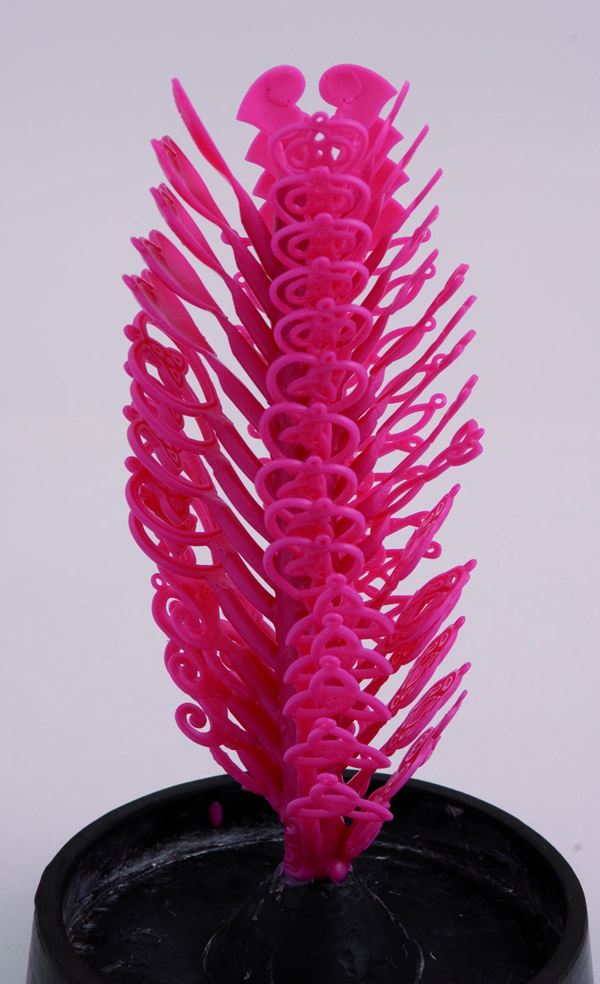
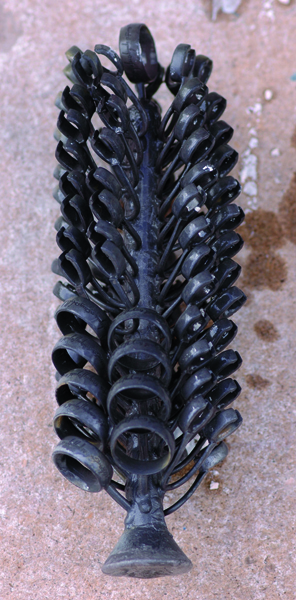
Individual wax pieces are attached to a central wax stem using a heated tool. Together, they form what is known as a wax tree. Depending on the size of the pieces, a single tree can hold up to 100 individual items.
Positioning the waxes correctly is a skill in itself. The arrangement must allow the molten metal to flow effectively through the finished mould, so creating a good wax tree takes considerable experience and practice.
Investment
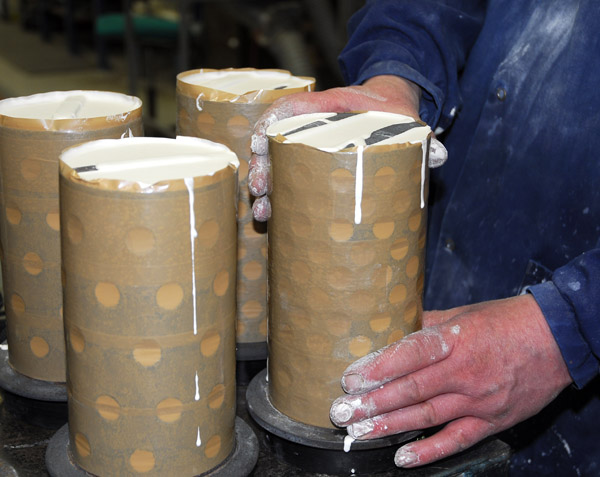
The completed wax tree is placed inside a perforated steel cylinder, known as a flask. The small holes are temporarily sealed before a liquid investment material—similar in consistency to plaster of Paris—is poured around the tree.
After approximately ten minutes, the investment has set. The tape is removed, leaving the wax tree completely enclosed within a solid investment mould.
Burnout
The flasks are placed in a high-temperature oven and heated overnight to around 1,200°C. This melts and removes the wax, leaving behind an exact negative impression of the jewellery designs.
At the same time, the heat fuses the investment particles together, creating a strong, heat-resistant mould ready to receive the molten metal.
This is where the process gets its name: the original wax pattern has been “lost”, leaving the cavity into which the metal will be cast.
Casting
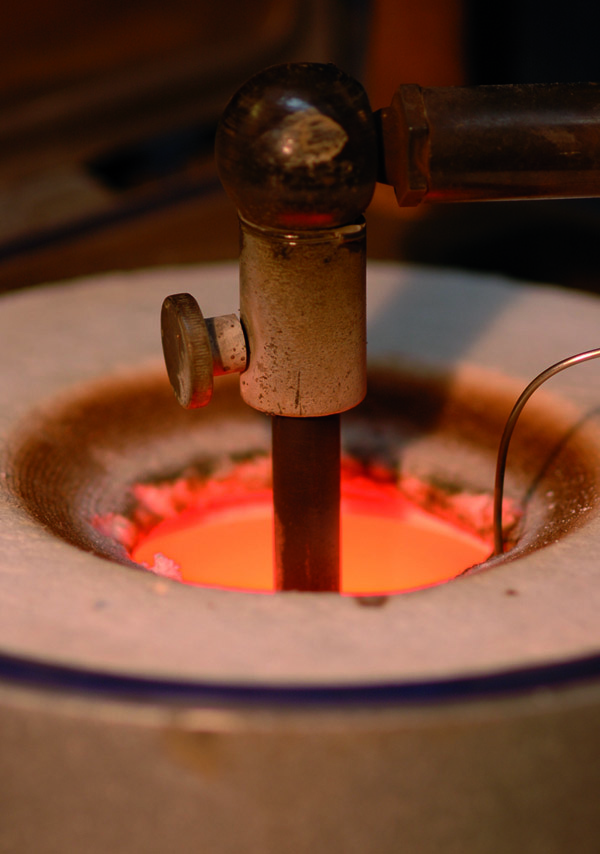
While the flasks are still hot, they are transferred to a vacuum casting machine. The required amount of metal is placed into a crucible and melted using induction heating.
Once molten, the silver or bronze is drawn into the investment mould while a vacuum is maintained. This helps the metal flow into even the smallest cavities and intricate details of the design.
The vacuum helps minimise porosity, while an inert gas protects the molten metal from oxidation during casting.
Quenching
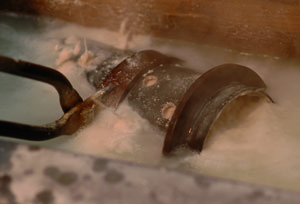
After around five minutes of cooling, the hot flask is quenched in cold water. This breaks away approximately 90% of the investment material.
The remaining investment is removed using a power washer, revealing a tree of freshly cast pieces.
At this stage, the jewellery can look surprisingly dull and tarnished—quite unlike the finished pieces you see in our collections. Yet beneath this rough exterior is an extraordinary level of detail. The investment mould captures the finest features of the original wax, which is why creating an excellent master pattern is so important.
De-Spruing and Fettling
The individual pieces are carefully clipped from the silver tree. Each piece is then fettled, filed and sanded to remove the casting sprues and any unwanted marks or blemishes.
It is also at this stage that additional findings, such as ear-stud posts and pins, are soldered into place.
The aim of fettling is to refine the surface and prepare each piece for its final polish.
Polishing
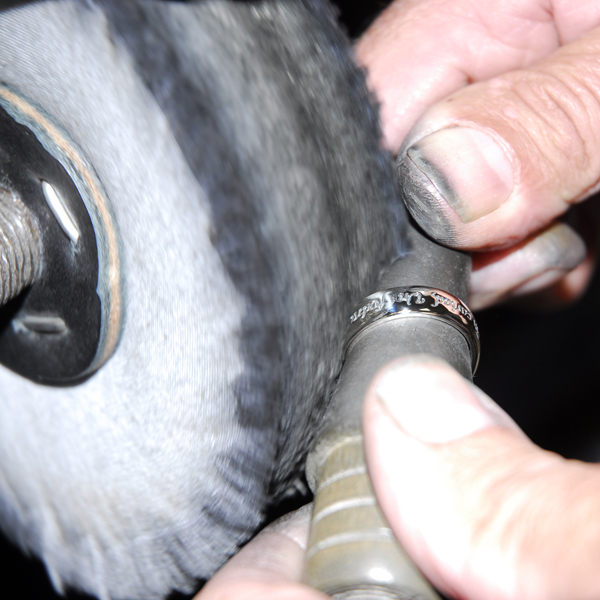
A mechanical polishing process can produce a very good finish, but achieving that distinctive, brilliant jewellery shine requires a more skilled approach.
Each piece is hand polished using a high-speed rotary mop together with rouge and other polishing compounds. This final stage transforms the freshly cast, rather unassuming item into the smooth, bright and beautifully finished jewellery you see.
From Wax to Jewellery
The lost wax process is a fascinating combination of traditional craftsmanship, precision and modern technology. From the original master pattern and carefully positioned wax tree to casting, fettling and hand polishing, every stage contributes to the quality of the finished piece.
What begins as a simple wax pattern is gradually transformed into a piece of sterling silver or bronze jewellery—capturing the detail and character of the original design along the way.